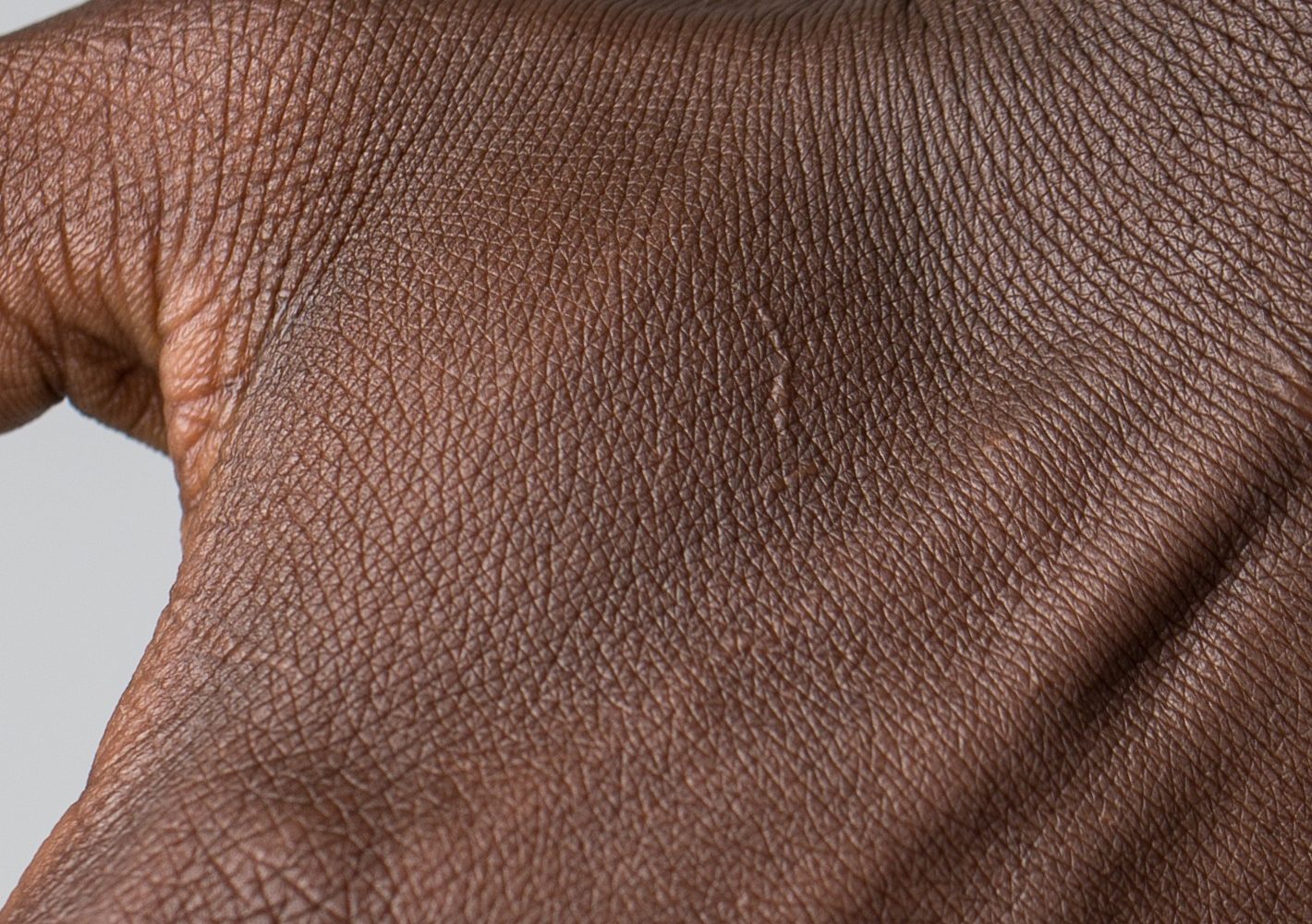
Open almost any exfoliating-acid product page and you will find some version of the same pitch: slough off the dull, dead outer layer to reveal fresher skin underneath. The stratum corneum — the outermost 15 to 20 micrometres of facial skin, give or take, since it varies by body site — gets cast as the villain in its own marketing copy. It is worth being precise about what that layer actually is and does before deciding whether it deserves the reputation.
The corneum is made of corneocytes: flattened, enucleated (no nucleus) former keratinocytes, bound together in a lipid matrix built mostly from ceramides, cholesterol, and free fatty acids. “Dead” is accurate in the sense that these cells no longer have active metabolic machinery. It is not accurate in the sense of irrelevant. This is the layer that keeps water in and everything else — irritants, allergens, most bacteria — out. Dermatology sometimes calls it the “brick and mortar” model for a reason: corneocytes are the bricks, the lipid matrix is the mortar, and a wall missing its mortar is not a wall.
“A barrier that lets nothing through would be useless. A barrier that lets everything through would be worse than useless. The corneum’s whole job is being selective, not being absent.”
R. Okonkwo-Reyes — Formulation Lead, Stratum Lab
None of this is an argument against exfoliation. Encouraging more even corneocyte shedding is a real, useful thing an AHA or BHA does — built-up, unevenly shed corneum genuinely can look and feel rough, and evening that out is a legitimate reason to use an acid toner a few nights a week. It is an argument against treating the whole layer as disposable. The lipid matrix in particular is not something you want to strip nightly; that is the barrier repair conversation dermatology has been having for years, and it is why our own acid toner is formulated with sodium hyaluronate rather than nothing.
The practical takeaway: exfoliate the corneum on purpose, at a frequency your skin tolerates, and pair it with something that replaces what a acid genuinely does remove. Treating the whole layer as an enemy to be dissolved is a marketing simplification, not a dermatological one.